

Other Commitments
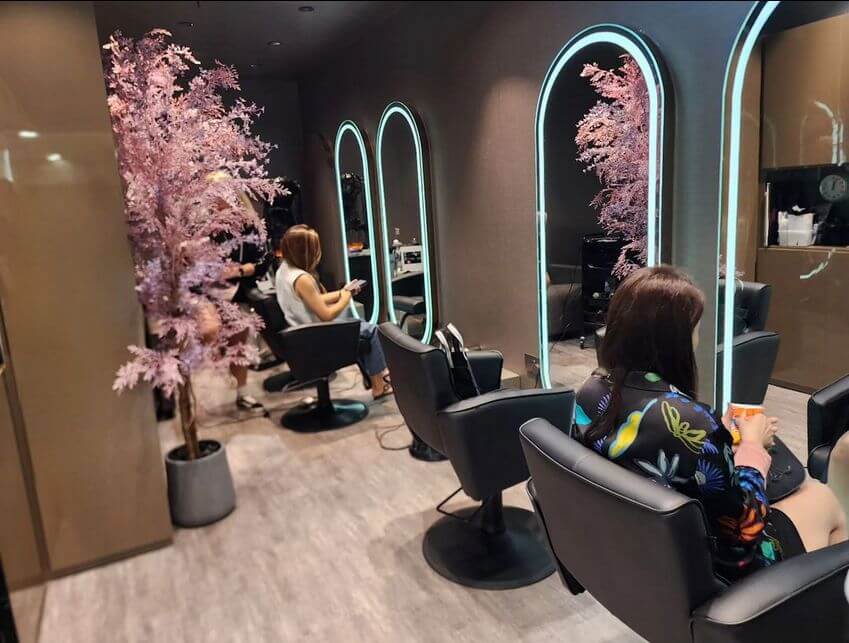
Very nice corner shop right in front of the 2x bubble lifts where grab and taxi patrons come up from (quality traffic with high foot fall, not the MRT crowd). Business has been in operation for 4 years+ with existing customer base located at a popular fringe of Orchard Road ie Far East Plaza. Salon has been renovated 2x and the latest full renovation was in Feb 2025 that cost $28k.
Takeover comes with all existing stocks and machines. We do not buy China made machines. All are authentic Korea hair perm machines that cost up to $8000. Latest state of art Korean Nano Mist Machine that cost $3800. State of Art Made in Italy Maletti Hair Wash Machine that cost $12,000. Hundreds of Shiseido and L'Oréal color that cost more than $3,000. Existing 2 stylists ie 1 Director PR and 1 WP Malaysian.
1 owner with multiple businesses, no time to manage or advertise etc. Company no loan, no debt, no package. Comes ready with Visa, Master, Nets machine and OCBC business bank account and bidded UEN numbers. Monthly gross sales around $9000-12,000 depending on season. Suitable for aspiring Stylist to takeover and operate or investor who looks at low cost entry level thereafter seek opportunities with tied-up or social media to scale it up! Operating hours now is 11am-7pm daily (close on Monday).
Looking at easy fuss free takeover and not one that ask tonnes of questions then MIA. Not in need of sales proceed to survive so don't give me ridiculous offers or werid proposal.
| Year | Revenue (SGD) | Earnings (SDE) | NET MARGIN |
|---|---|---|---|
| 2026 | SGD 12K | SGD 2K | 16.7% |
N/A
N/A
ACRA
ACRA
02 Jun 2027
AI paraphrased description: This SWOT analysis helps you quickly see the good and bad sides of a business, plus the opportunities to grow it and the risks to watch out for. It makes it easier for buyers to decide if a business is worth buying without getting lost in complicated details
Google rating is 4.8 with 127 reviews, which is a stronger and more defensible social-proof base than most small Singapore salons that sit below ~50 reviews. At this review volume, the rating typically reflects multi-period consistency rather than one-off spikes, which can support walk-ins and higher conversion from map searches. For a buyer, acquiring an established review footprint can be materially faster than building one organically over 1–3 years, assuming service quality is maintained post-handover.
The operating address is within the Orchard-area retail cluster, which is one of the few Singapore locations where walk-in demand can be meaningfully higher than typical neighbourhood salons. For a buyer comparing acquisition versus a new setup, securing a comparable central location often requires longer lead times, higher deposits, and higher fit-out costs. This location can support services that depend on discretionary traffic (e.g., colour and perm add-ons), provided rent remains sustainable.
The seller reports the outlet was fully renovated in Feb 2025 at a cost of about SGD 28k, following a prior renovation cycle. For Singapore salons, a basic-to-mid fit-out commonly runs ~SGD 20k–60k depending on plumbing/electrical and wash stations, so a recent refresh can reduce the buyer’s immediate capital expenditure and downtime risk. This should be validated through invoices and landlord/MCST approvals where relevant.
According to the listing, the takeover includes salon machines and colour inventory, including named brands and higher-end wash/perm equipment. For Singapore salons, equipment replacement (wash stations, perm machines, mist/steam devices) can be a meaningful startup cost and may take weeks to procure and install, so inclusion can justify acquisition over starting from scratch. A buyer should verify asset condition, ownership (not leased), and current market replacement cost versus book value.
Seller-submitted financials state 2025 annual revenues of SGD 12k and annual earnings of SGD 2k, while the narrative states monthly gross sales around SGD 9k–12k depending on season. For Singapore salons at this size, annual revenue is more commonly in the ~SGD 100k–400k range if monthly sales are in the stated band, so the time basis and classification of revenue/earnings warrant verification. A buyer will need to reconcile POS/bank statements and the full P&L to understand true run-rate and valuation.
The business is listed as a sole proprietorship, which in Singapore typically means the buyer cannot acquire shares and will instead structure an asset purchase with assignment/novation of key contracts. Compared to buying a Pte Ltd, this can increase execution effort (new merchant accounts, new contracts, possible need to re-apply for certain accounts) and raises the importance of clean asset/lease transfer documentation. Buyers should budget additional legal and operational work for a smooth day-one transition.
The seller reports two stylists (one PR director and one Malaysian Work Permit holder). In Singapore salons, a small delivery team means revenue is highly sensitive to a single stylist’s departure, leave, or productivity changes, especially during ownership transition. If the WP holder is essential to throughput, the buyer must ensure the new entity can retain or re-sponsor the role and that employment terms are transferable and acceptable.
The listing states the owner has limited time to manage or advertise. For Singapore consumer salons, consistent demand increasingly depends on digital acquisition (Instagram/TikTok content, reviews conversion, and online booking) rather than relying only on walk-ins, especially outside peak periods. A buyer may inherit a business that performs adequately on foot traffic but has not built a repeatable marketing engine, which can constrain growth without deliberate investment.
Within the first 60–90 days, a new owner can implement a clear booking pathway from Google (call-to-action, service menu, and a booking link via a booking tool), then track conversion using UTM/phone tracking. Many Singapore salons improve utilisation by reducing reliance on walk-ins and making repeat booking frictionless, particularly for colour/perm maintenance cycles. This is achievable if the buyer can access and retain the Google Business Profile and standardise service durations/pricing for online display.
Over 6–12 months, the buyer can package recurring services (e.g., root touch-up cycles, treatment bundles, fringe trims) into simple membership tiers with monthly billing or pre-paid packages that comply with fair consumer terms. For small Singapore salons, shifting even a portion of revenue into recurring commitments can reduce seasonality and improve staffing efficiency. This is most feasible if the customer database exists and repeat-visit frequency can be evidenced from POS history.
In 3–9 months, the buyer can design higher-margin service tiers (e.g., premium perm/treatment experiences) that explicitly leverage the seller-reported Korean/Italian equipment and branded colour inventory, supported by before/after content and clear pricing ladders. In Singapore, premium upsells often drive margin more than base haircut pricing, especially in high-rent central locations. This is achievable if equipment is owned outright, in good condition, and staff are trained to deliver consistent outcomes.
Within 9–18 months, a buyer can increase capacity by adding one stylist or assistant and tightening roster utilisation (peak-hour staffing, appointment spacing, and retail add-ons). At reported monthly gross sales of SGD 9k–12k, a modest uplift in chair utilisation can move revenue toward the range seen in small Singapore salons with 2–3 producing stylists (often ~SGD 15k–30k/month, depending on price point and rent). This depends on landlord approval for staffing levels, and on retention incentives for existing stylists through the transition.
Central retail leases in the Orchard area can reprice quickly on renewal, and even a modest rental step-up can compress margins materially for a small salon with limited scale. Unlike multi-outlet operators, a single-outlet business has less ability to absorb cost increases through shared overhead or cross-outlet staffing. This threat is active in Singapore’s prime retail corridors and can affect valuation even if revenue holds steady.
If the operation relies on Work Permit staff (seller-reported), changes in MOM quota rules, levy costs, or eligibility criteria can increase cost or reduce the ability to retain/replace staff within 24 months. For a small salon, losing one producing stylist can have an immediate impact on capacity and customer retention. This risk is structurally higher for small consumer services that depend on a limited number of skilled operators.
Orchard-area salons operate in a dense competitive environment where consumers compare pricing and reviews quickly via Google and social platforms. For a business at a smaller revenue scale, discount-led competition can force promotional pricing that reduces gross margin, particularly for colour/chemical services with meaningful consumables costs. Maintaining differentiation (stylist reputation, outcomes, speed, experience) becomes critical to defend pricing.
A significant share of new-customer discovery in Singapore salons comes from Google Maps ranking and review velocity, which are influenced by algorithm changes and competitor activity. Even with a 4.8 rating, reduced review recency or category/attribute mismatches can lower visibility, impacting walk-in and call volumes. This matters more for a small outlet because there may be limited alternative acquisition channels if paid ads and content marketing are not already active.
DATA DISCLOSURE
Please wait while we prepare your results