img
  • Food & Beverage
  • Physical
  • 1 month ago
  • 20 views

Ground-Floor F&B Takeover (50 seats, fitted kitchen) @ Pasir Panjang

Basic Business Information

  • Industry: Food & Beverage
    • Legal Structure: Mostly one-off transactions
    • Operating Model: Physical
    • Year Founded: 2026
    • Team Size: 6-10
  • Reasons for Selling:

    No time to visit

  • Description

    Financial Information

    Currency: SGD (S$)
    Financial Trends
    Annual Revenue Overview
    Financial Summary (SGD)
    Revenue (Dark Purple)
    Earning (Light Purple)
    3-Year Financial Summary
    Year Revenue (SGD) Earnings (SDE) NET MARGIN
    2025 SGD 45K SGD 3K 6.7%
    MONTHLY OPERATING COSTS
    S$20,000
    MONTHLY MISC. EXPENSES
    S$10,000
    BUSINESS MODEL
    Revenue Model: Mostly one-off transactions
    Tangible Assets:
    • Inventory: S$45,000

    Intangible Assets:
    • N/A

    Other Details

  • Licenses & Permits:

    N/A

  • Support Provided:
    • N/A

    SWOT Analysis

    AI paraphrased description: This SWOT analysis helps you quickly see the good and bad sides of a business, plus the opportunities to grow it and the risks to watch out for. It makes it easier for buyers to decide if a business is worth buying without getting lost in complicated details

  • Ready-to-operate dine-in layout reduces build-out time
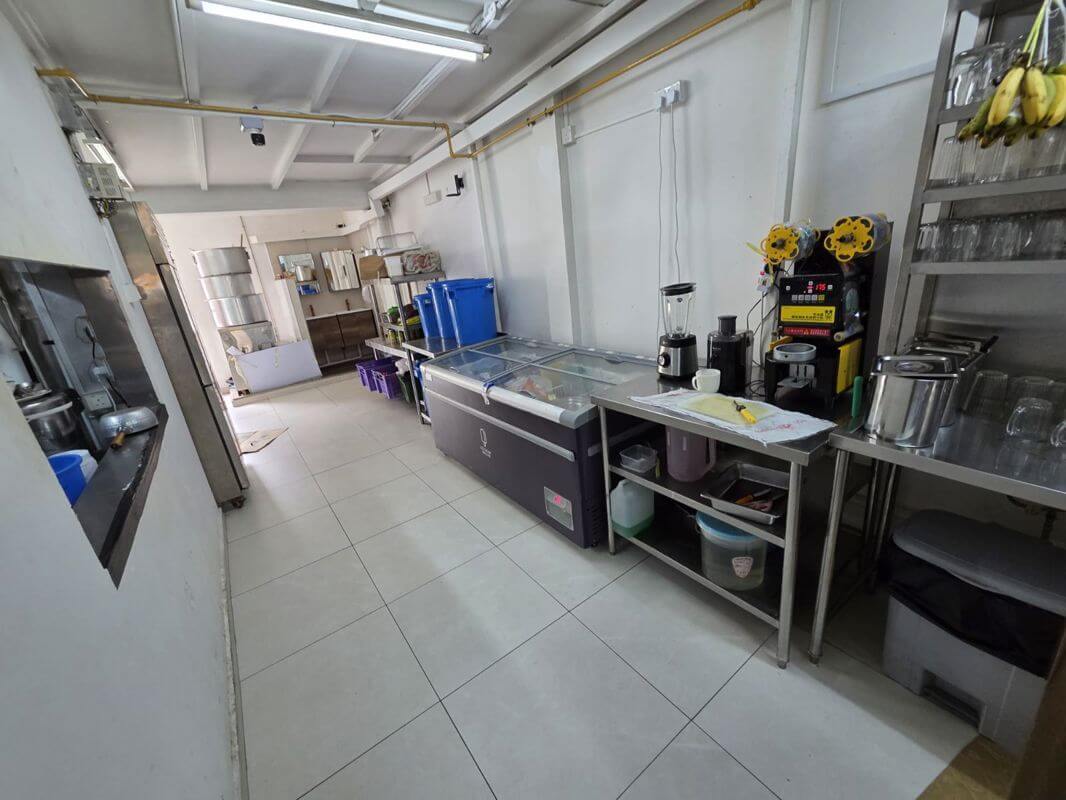
  • The seller reports the buyer takes over a fitted ground-floor dine-in operation with ~50 seats plus a private room, which is operationally valuable because seating capacity and front-of-house layout are typically the longest-lead items to design and construct in Singapore F&B.

    For a new concept, the alternative—leasing a bare unit—often requires several months of renovation, authority coordination, and pre-opening rent burn; acquiring a configured space can materially shorten the time to first revenue if the lease and approvals are transferable.

  • Back-of-house infrastructure in place (exhaust and grease trap)
  • According to the listing, the kitchen was newly renovated (estimated ~SGD 50k investment) and includes exhaust and a grease trap, both of which can be costly and time-consuming to install or upgrade depending on landlord and building constraints.

    In Singapore, units without suitable exhaust/grease management can limit cuisine choices and delay opening; inheriting these capabilities widens the feasible concept set on day one, subject to inspection and landlord/authority requirements.

  • Regulatory starting point via stated SFA licence inclusion
  • The seller states an SFA licence is included as part of the setup, which—if transferable/renewable without interruption—can reduce the time to commence regulated food operations compared with a new application cycle.

    For Singapore F&B, avoiding licensing downtime can be financially material because fixed costs (rent and utilities) continue even when trading is not yet permitted.

  • Immediate working inventory reported at SGD 45,000
  • Seller-submitted tangible assets include inventory/stock valued at SGD 45,000, which can reduce initial cash tied up in opening purchases and allow faster operational ramp-up.

    For small Singapore dine-in operators, initial consumables and packaging purchases are often a non-trivial cash requirement; however, value depends on stock age, condition, and whether it is transferable/usable for the buyer’s concept.

  • Economics and cost base require reconciliation against revenue
  • The listing reports 2025 revenue of SGD 45k and earnings of SGD 3k (~6.7% margin), while also stating monthly operating cost of ~SGD 20k plus monthly variable expenses of ~SGD 10k; these figures are not directly comparable without definitions (e.g., budgeted vs actual, inclusive/exclusive of rent, owner drawings, or cost categories).

    For Singapore dine-in F&B, a 50-seat operation commonly carries meaningful fixed costs (rent, utilities, base staffing) that can exceed SGD 20k/month depending on location and hours, so a buyer should confirm what costs are truly ongoing and what is one-off renovation spend.

  • Primarily one-off transactions increase cashflow volatility
  • The seller describes the revenue model as mostly one-off transactions, which typically results in higher week-to-week volatility than models with contracted catering, corporate accounts, or membership-style repeat traffic.

    In Singapore F&B at this size, operators commonly mitigate volatility through delivery platforms, set-menu group bookings, or corporate/event demand; the absence of evidence of these channels means the buyer may inherit a demand-generation gap on day one.

  • Digital acquisition assets are not evidenced (no site/social provided)
  • No website or social channels were provided, and no GMB profile data was available in the inputs; for consumer F&B in Singapore, the typical norm is at least a maintained Google profile plus an active social channel to support discovery and menu/operating-hour clarity.

    If these assets do not exist or are not transferable, a buyer may need to invest immediately in basic digital setup (listing hygiene, menu photography, and reservation/contact paths) to avoid preventable revenue leakage.

  • Manpower transferability is uncertain under MOM rules
  • The seller indicates an optional manpower bundle (1 S Pass, 2 NTS, 2 Work Permits) and a team size of 6–10, but actual headcount at takeover is to be confirmed; in Singapore, work pass transfers/changes of employer require MOM process compliance and are not automatic.

    For dine-in F&B, labour is typically one of the two largest cost lines (alongside rent), so uncertainty on which staff will remain and at what salary levels can materially change the post-takeover operating model.

  • Sole proprietorship structure limits deal structuring options
  • The business is a sole proprietorship, which in Singapore often means the buyer effectively acquires assets and assigns contracts/licences rather than purchasing shares with continuity of entity history.

    This increases the importance of verifying what exactly is transferable (lease, licences, supplier accounts, and staff arrangements), and it can add legal/administrative steps compared with acquiring a private limited company.

  • Monetise the private room via group and corporate booking packages
  • Within the first 3–6 months, a buyer can productise the private room into set-menu packages for birthdays, small corporate meals, and community gatherings, using fixed per-pax pricing and minimum-spend rules to improve predictability versus purely walk-in sales.

    This is achievable with the existing physical layout (private room plus ~50 seats) and requires mainly menu engineering, booking terms, and basic promotion—assuming the lease permits private events and operating hours align with group dining demand.

  • Build foundational digital demand channels from a low base
  • In the first 30–90 days, establish and optimise Google Business Profile (hours, menu, photos, Q&A) and launch a simple Instagram/TikTok content cadence focused on menu proof, behind-the-scenes kitchen capability, and the private-room use case.

    For Singapore consumer F&B, these are baseline channels that often drive a meaningful share of discovery; the opportunity exists because no transferable digital assets are evidenced in the listing, so incremental gains can be material if executed consistently.

  • Introduce repeat-demand mechanics to reduce reliance on one-off visits
  • Within 6–12 months, implement repeat-visit levers such as weekday set lunches, stamp/loyalty programmes, and limited-time seasonal menus, then measure uplift through POS data and simple cohort tracking.

    This is realistic for a dine-in operation with stable seating capacity and air-conditioned comfort, and it directly addresses the current one-off transaction model—provided the buyer has a POS system and a consistent menu/operating rhythm.

  • Leverage the fitted kitchen to expand into delivery and catering
  • In 3–9 months, a buyer can add delivery and small-scale catering as parallel channels by creating delivery-optimised menu SKUs and packaging, then onboarding to major platforms or direct WhatsApp ordering for nearby offices/residential clusters.

    This is enabled by the seller-reported kitchen fit-out plus exhaust/grease trap, which can support higher-throughput cooking; it is contingent on confirming any landlord or licence conditions affecting delivery operations and on meeting platform onboarding requirements.

  • Rent and common cost inflation can compress margins quickly
  • For a 50-seat dine-in model, rent is typically a dominant fixed cost in Singapore, and renewals or step-ups can materially change break-even sales volume within a single lease cycle.

    Because seller-submitted profits are modest in absolute terms (SGD 3k/year), even moderate increases in rent or service charges could turn the operation cashflow-negative unless the buyer can lift average ticket size or throughput.

  • MOM manpower policy changes may constrain foreign staffing plans
  • The listing’s staffing plan references S Pass/NTS/Work Permit components; MOM quota adjustments, levy changes, or tightened eligibility can reduce the ability to retain or replace foreign staff within 12–24 months.

    At this scale, a sudden staffing shortfall can force reduced operating hours or service quality impacts, directly affecting revenue during the critical post-takeover stabilisation period.

  • Ingredient and utility inflation may outpace menu repricing ability
  • Singapore F&B operators continue to face periodic spikes in poultry, cooking oil, and other staples, alongside utilities volatility; small operators often have limited purchasing power and weaker hedging options than chains.

    If the concept relies on price-sensitive dine-in traffic and one-off transactions, passing costs through quickly can be difficult, which can compress gross margin before demand adjusts.

  • Competitive density limits differentiation without a brand asset
  • This listing reads as a facilities-and-compliance takeover rather than an established brand acquisition, and no third-party reputation signals were provided; in Singapore, nearby alternatives can capture demand quickly if the new concept is not clearly positioned.

    A buyer may need to invest in concept clarity, menu differentiation, and visible reviews early, otherwise customer acquisition costs (promos, platform ads) can rise and erode margins in the first year post-acquisition.

    DATA DISCLOSURE

    • Analysis based on self-reported data provided by seller
    • Independent verification of all claims recommended
    • Buyers should conduct comprehensive due diligence including financial audit, customer interviews, and legal review
    • Contact seller for supporting documentation (tax returns, contracts, licenses, etc.)

    Asking Price:

    S$143,000

    1.7 / 5

    Preferred Contact

    Phone Call

    Location:

    Pasir Panjang

    Revenue:

    S$45,000

    Earnings:

    S$3,000

    Contact

    Please wait while we prepare your results

    Checking the data and setting up the next view. Please stay on this page while we finish loading. Almost there. Your content will appear shortly.