


Market Expansion
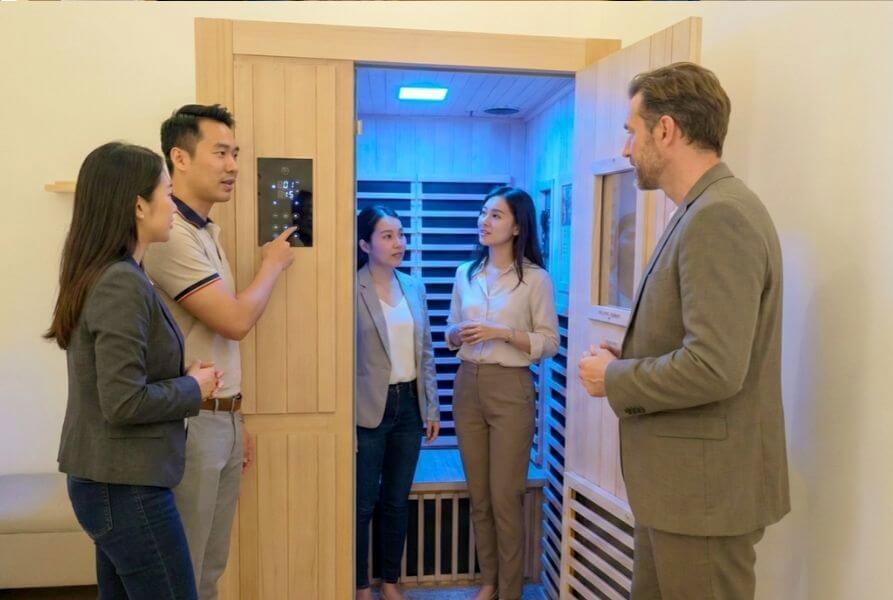
Self-Serviced Fully-Automated, 24 Hour Income Generating, Far Infrared Wellness, Private Sauna.
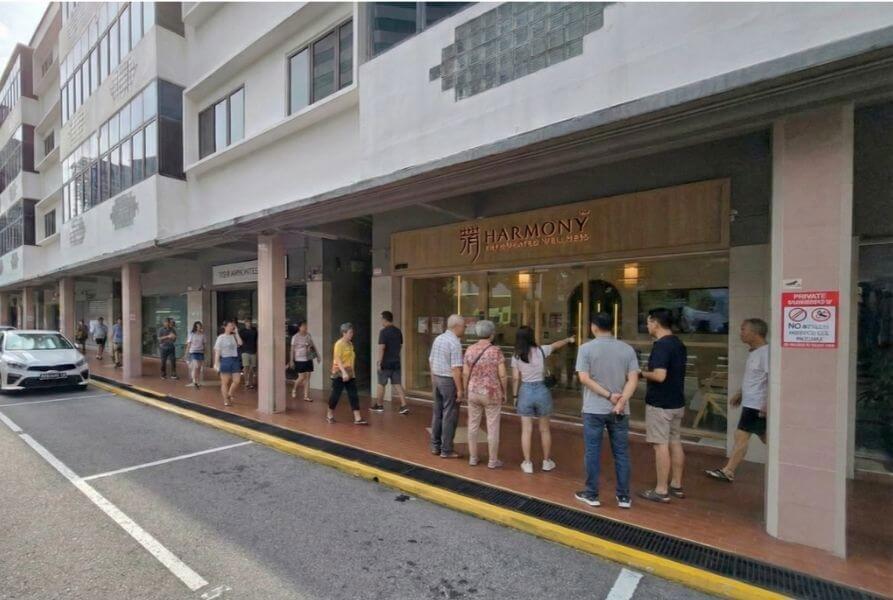
Visit our Demo Outlet at
468 River Valley Road Singapore 248353
Open Daily from 1pm - 8pm.
Please whatsapp to make an appointment : +6588823297
Watch more intro video on our facebook: https://www.facebook.com/harmonyfir
Franchise Opportunity – Automated Far Infrared Wellness Concept
An opportunity to own a next-generation Far Infrared (FIR) Wellness Franchise designed for low involvement, low manpower, and scalable returns.
This concept operates on a fully automated, self-service model, eliminating the need for on-site staff and monthly payroll. The system is supported by centralised marketing, booking, and operational management, allowing franchise partners to focus on ownership rather than daily operations.
Key Highlights
• No Manpower Required
Fully self-service operation with smart access control, online booking, and automated payment system.
• Zero Salary Overhead
No full-time staff or monthly payroll required, significantly reducing fixed operating costs.
• Centralised Marketing & Operations
Brand marketing, digital advertising, customer acquisition, booking platform, and system management are centrally handled.
• Passive Ownership Model
Designed for business owners seeking recurring income without daily hands-on management.
• Proven Wellness Demand
FIR wellness services are increasingly popular among urban professionals seeking relaxation, recovery, and lifestyle balance.
• Small Footprint, High Efficiency
Compact space requirement with private rooms, suitable for retail or commercial locations.
• Scalable & Replicable Concept
Standardised setup, systems, and operating procedures for easy expansion.
Ideal For
• Investors seeking semi-passive or passive income
• Professionals or business owners diversifying into wellness
• Franchise partners looking for low-manpower, system-driven businesses
Training, systems setup, and ongoing support are provided to ensure smooth onboarding and long-term sustainability.
| Year | Revenue (SGD) | Earnings (SDE) | NET MARGIN |
|---|---|---|---|
| 2026 | SGD 28K | SGD 22K | 78.6% |
N/A
N/A
N/A
AI paraphrased description: This SWOT analysis helps you quickly see the good and bad sides of a business, plus the opportunities to grow it and the risks to watch out for. It makes it easier for buyers to decide if a business is worth buying without getting lost in complicated details
Seller-submitted figures indicate FY2025 revenue of SGD 28k with earnings (SDE) of SGD 22k, implying an approximate 79% margin. For small Singapore wellness outlets, typical net margins are often closer to ~10–30% once rent, utilities, consumables, and marketing are fully loaded, so a margin at this level—if it holds under due diligence—would place the business among the stronger performers at micro scale. This would meaningfully reduce the time to pay back acquisition capital compared to starting from scratch, provided the cost base (especially rent and system fees) is accurately captured.
The seller reports a fully automated, self-service setup with smart access control, online booking, and automated payment, designed to operate with minimal on-site staffing. In Singapore, staffing is a primary margin pressure for spas and wellness studios (front desk + therapists), and incremental headcount typically rises with volume. If the automation stack and SOPs are transferable, a buyer acquires an operating model that may scale with fewer hires than a conventional wellness outlet.
According to the listing, marketing, booking platform, and operational management are centrally handled, positioning this as a replicable concept rather than a single-site craft business. In Singapore, multi-outlet wellness brands often incur higher overhead for training, consistency controls, and customer service coverage; a centralised system, if real and well-documented, can shorten the ramp time for additional locations. The acquisition value is highest if the buyer receives clear SOPs, vendor contacts, and system access credentials.
The listing states a mixed recurring and one-off revenue model, which is generally stronger than purely walk-in, one-off transactions for consumer wellness. In Singapore, membership and package-driven models can improve retention and marketing efficiency compared to single-session reliance, particularly for niche modalities. While the recurring proportion is not quantified, the stated model indicates there may already be some repeat-purchase mechanics a buyer can formalise and grow.
Only one year of seller-submitted revenue and earnings is provided, with no balance sheet, debt disclosure, or clear breakdown of rent, utilities, marketing spend, platform fees, maintenance, and payment processing costs. For a Singapore consumer wellness site, fixed costs (especially rent and utilities) can be the primary driver of viability, and buyers typically require at least 12 months of bank statements plus an itemised P&L to validate seasonality and true contribution margin. The buyer effectively inherits underwriting work on day one before confidently scaling or replicating the concept.
The seller reports the business was founded in 2023, making it an early-stage concept in Singapore wellness terms. Many new wellness formats show initial curiosity-driven demand, but sustainable performance typically depends on repeat purchase, referral loops, and stable CAC under paid ads. Without independently verifiable reviews, repeat-rate data, or multi-year trading history, a buyer must treat long-term retention and steady-state utilisation as not yet demonstrated.
No Google My Business rating/review count and no third-party web search results were provided, limiting visibility into customer satisfaction patterns (hygiene, heat comfort, booking reliability, refunds, safety). In Singapore consumer wellness, trust is a major purchase driver and is often evidenced through consistent review volume rather than isolated testimonials. This creates a diligence requirement: a buyer cannot assume reputation strength without verifying platform ratings and complaint history.
The value proposition depends heavily on smart access control, online booking, and automated payment; if any component is tied to a third-party vendor contract, a personal account, or proprietary code the seller controls, continuity and handover become critical. In Singapore, consumer businesses with unattended access also face higher expectations for remote support, incident response, and clear liability processes. A buyer may need to invest in system hardening, monitoring, and customer support coverage to maintain service reliability at scale.
Within 3–6 months, a new owner can formalise tiered memberships (e.g., off-peak plans, multi-session packs, corporate bundles) and instrument the funnel (trial-to-member conversion, churn, utilisation per member) to stabilise cashflow. This is achievable with the seller-reported online booking/payment infrastructure, provided the buyer has access to transaction-level data and can implement automated lifecycle messaging (WhatsApp/Email). The prerequisite is clean customer consent and data handling processes aligned to Singapore PDPA requirements so retention marketing can be executed compliantly.
In the first 90 days, the buyer can introduce time-based pricing (peak vs off-peak), limited-time recovery bundles, and partner promotions to lift weekday/daytime utilisation—typically the key driver of profitability for appointment-based wellness rooms in Singapore. This leverages a self-service model where incremental sessions add less manpower cost than in therapist-led operations. The prerequisite is validating capacity constraints (cleaning/reset time per session, remote access procedures, and incident handling) so higher throughput does not degrade experience.
Within 6–12 months, a buyer can create referral partnerships with nearby gyms, yoga/pilates studios, and physiotherapy/rehab providers, positioning sessions as recovery add-ons with tracked referral codes. In Singapore, these channels often deliver higher-intent customers than broad social ads, improving CAC and repeat probability for recovery-oriented services. The prerequisite is a clear partner offer (rev share or bundle pricing) and simple redemption workflow integrated into the booking/payment system.
If the current site’s true all-in contribution margin is validated, a new owner could expand within 12–18 months by rolling out a second site using the same room design, access control, booking, and SOPs. This is realistic in Singapore because small-footprint wellness concepts can be deployed in selected commercial pockets, but the economics are highly sensitive to rent and operating-hour permissions. The prerequisite is documenting the full build-out cost, lead time, vendor list, and a location selection model based on utilisation targets and rental thresholds.
Far-infrared and private recovery room concepts are not difficult to replicate in Singapore if competitors can secure suitable space and procure similar equipment. At the company’s current seller-reported revenue scale (SGD 28k annually), even modest competitive discounting or a nearby entrant can materially affect utilisation and paid marketing efficiency. This threat is amplified if the business’s differentiation is primarily the modality rather than a defensible brand, reviews, or exclusive location rights.
For Singapore retail-adjacent wellness concepts, rent is commonly one of the largest fixed costs, and renewals can reprice sharply depending on corridor demand. With small absolute revenue (seller-reported), any step-up in rent, utilities, or service charges can turn a profitable unit into a marginal one unless utilisation and pricing rise in tandem. This is an external pressure that can emerge within a single lease cycle regardless of operational execution.
The listing highlights Facebook as a key channel (including an intro video), suggesting reliance on social discovery and/or paid acquisition. In Singapore, wellness advertisers can face cost volatility from algorithm changes, audience saturation, and tightening ad policy around health-related claims, which can reduce reach or increase CPL/CPA. At micro scale, a CAC increase can rapidly lower net earnings unless offset by stronger retention and partnerships.
A self-service, potentially 24-hour format is more exposed to operational incidents—failed access, payment disputes, equipment malfunction, or hygiene lapses—because there is no on-site staff buffer. In Singapore’s review-driven consumer market, a small number of negative incidents can disproportionately affect conversion, particularly without a deep review base to dilute impact. This threat persists even with good operations and typically requires investment in monitoring, response SLAs, and clear customer support coverage.
DATA DISCLOSURE
Please wait while we prepare your results