


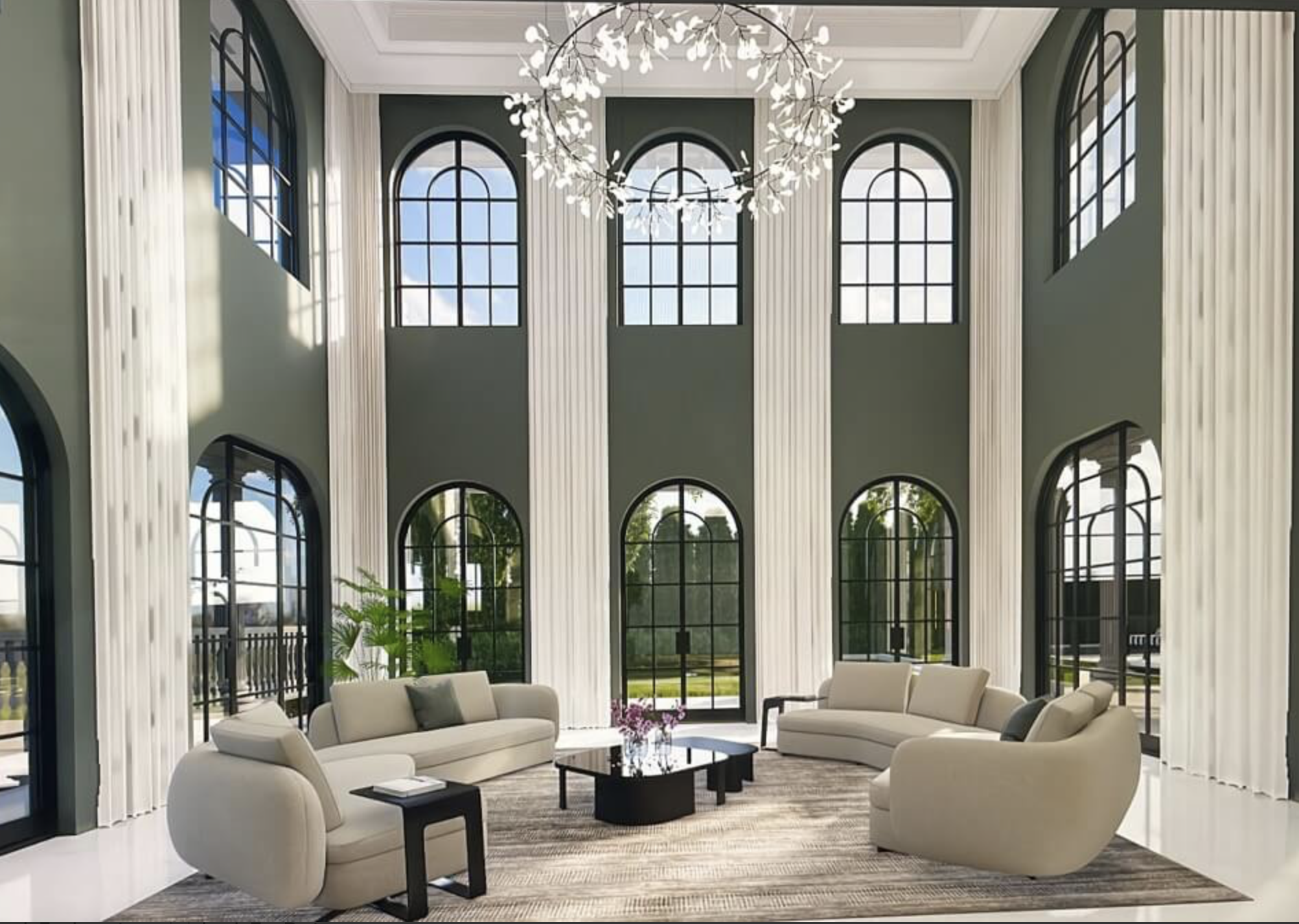



img
  • Professional Services
  • Online
  • 2 hours ago
  • 2 views

Online Interior Design Services Sole Proprietorship In Central Singapore

Basic Business Information

  • Industry: Professional Services
    • Legal Structure: Mostly one-off transactions
    • Operating Model: Online
    • Year Founded: 2018
    • Team Size: 1
    • Postal Code: 238257
    • Website Address: https://www.havana-interiors.com/
  • Reasons for Selling:

    Relocation

  • Description

    Financial Information

    Currency: SGD (S$)
    Financial Trends
    Annual Revenue Overview
    Financial Summary (SGD)
    Revenue (Dark Purple)
    Profit (Light Purple)
    3-Year Financial Summary
    Year Revenue (SGD) Earnings (SDE) NET MARGIN
    2025 SGD 250K SGD 230K 92.0%
    2024 SGD 260K SGD 240K 92.3%
    MONTHLY OPERATING COSTS
    S$2,000
    MONTHLY MISC. EXPENSES
    S$500
    BUSINESS MODEL
    Revenue Model: Mostly one-off transactions
    Tangible Assets:
    • N/A

    Intangible Assets:
    • N/A

    Other Details

  • Licenses & Permits:

    ACRA Bizfile

    53382213X

    24 May 2027

    Seller confirmed this license is valid and transferable


  • Support Provided:
    • Training Support: 6 week handover if required

    SWOT Analysis

    AI paraphrased description: This SWOT analysis helps you quickly see the good and bad sides of a business, plus the opportunities to grow it and the risks to watch out for. It makes it easier for buyers to decide if a business is worth buying without getting lost in complicated details

  • Seller-reported profitability that could support valuation if verified
  • Seller-submitted figures indicate SGD 250k revenue (2025) and SGD 230k SDE, implying an ~92% SDE margin, with 2024 at SGD 260k revenue and SGD 240k SDE showing a similar profile.

    For Singapore interior design / home-services professional businesses, typical sustainable net margins are often ~15–35% for small studios (approximate), materially lower than the seller-reported SDE margin.

    If these earnings hold under due diligence (including proper classification of pass-through costs and owner labour), the business would have strong cash generation relative to its scale, making acquisition potentially more attractive than starting from scratch.

  • Low fixed-cost structure reported, enabling flexibility for a buyer
  • The seller reports monthly operating cost of ~SGD 2,000 and variable expenses of ~SGD 500, implying an annual overhead run-rate around SGD 30k.

    For Singapore professional services operators, even a lean setup commonly incurs higher annual overhead once marketing, software subscriptions, insurance, and outsourced support are included (often ~SGD 40k–120k+, approximate, depending on lead-gen intensity and whether a workspace is maintained).

    If the cost base is accurate and sustainable, a buyer inherits an operation that can be run from a small footprint, preserving margin and allowing reinvestment into growth channels.

  • Demonstrated ability to generate mid-six-figure revenue at micro scale
  • The business reports annual revenue around SGD 250k–260k across 2024–2025 with a one-person team.

    In Singapore, many solo or micro interior design consultancies and styling services operate at materially lower annual revenue unless the founder has an established referral engine or consistent lead flow (directional benchmark: sub-SGD 150k–200k is common for early-stage solo practices, varying widely).

    If the reported revenues are substantiated by bank statements and signed client contracts, the buyer is acquiring proven demand and a working sales-to-delivery motion rather than building credibility from zero.

  • Existing owned channels for enquiries and brand continuity
  • The listing includes a dedicated domain website plus Facebook and Instagram pages, which can provide continuity of inbound enquiries and portfolio visibility after acquisition.

    For Singapore consumer-facing professional services, owned channels typically convert better when paired with trackable enquiry mechanisms (forms/WhatsApp CTAs) and consistent content cadence; many small operators rely only on marketplaces or personal networks (approximate norm).

    Assuming access credentials, historical content, and the domain/social assets transfer cleanly, these channels reduce time-to-market for a new owner compared with launching new accounts and rebuilding audience trust.

  • Sole proprietorship structure limits deal mechanics in Singapore
  • The business is structured as a sole proprietorship, which in Singapore typically means a buyer cannot acquire shares and must structure the deal as an asset purchase and/or business transfer arrangement.

    Compared with a Pte Ltd share sale (common for SMEs), this can increase legal documentation needs and requires careful delineation of what transfers (brand assets, contracts, IP, client deposits, and liabilities).

    A buyer should plan for additional time and professional fees to document assignment/novation of client contracts and to manage any pre-completion liabilities that remain with the proprietor.

  • Key-person dependency due to single-operator delivery model
  • The seller reports a team size of 1, which implies sales, design delivery, client management, and vendor coordination (if any) sit with the owner.

    For Singapore interior design-related services, buyer risk increases when project outcomes depend on one individual’s taste, relationships with contractors/suppliers, and responsiveness; small studios typically mitigate this with at least a designer + coordinator setup (directional norm: 2–5 staff for consistent throughput).

    On day one, a buyer inherits a transition challenge: maintaining service quality while transferring client trust and operational know-how from the founder.

  • Primarily one-off transactions reduce cashflow predictability
  • The revenue model is described as mostly one-off transactions, which is typical in Singapore project-based design work but creates uneven monthly cash inflows and reliance on continuous lead generation.

    Comparable Singapore service businesses with maintenance retainers or staged recurring fees (e.g., ongoing styling, refresh packages, or design-on-call) generally have more predictable cashflow and are easier to finance/scale (directional benchmark: 20–60% recurring is common in subscription/retainer-led service models; 0–10% for purely project-led operators).

    A buyer will likely need to introduce contracts, deposits, and scheduling controls to avoid revenue dips during ownership transition.

  • Financial profile requires reconciliation against Singapore operating realities
  • The seller reports very high SDE relative to revenue (about 92%) alongside low reported monthly costs (~SGD 2,500 total).

    In Singapore, even lean professional services typically incur meaningful costs for marketing, software, insurance, transport, and occasional outsourcing, and interior-related work often has pass-through expenses if the business manages procurement or contractor coordination (approximate norm: net margins commonly below 35% depending on scope).

    A buyer should verify whether the business is strictly design/consulting (low pass-through) versus managing renovation/procurement (higher pass-through), because this materially affects true margin, working capital needs, and valuation.

  • Convert one-off work into retainers and staged packages
  • Within the first 6–12 months, a buyer can introduce clear packaged offerings (e.g., design consult + concept + drawings + site visits) with staged billing and optional monthly support retainers for revisions, styling refresh, or project check-ins, converting a portion of one-off clients into repeat revenue.

    This is achievable by standardising deliverables, creating contract templates, and setting renewal/expiry milestones, provided the buyer first maps the current delivery process and typical project timelines to avoid overpromising.

    Even a modest shift toward predictable retainers can reduce reliance on constant new lead generation and improve cashflow planning for hiring or marketing.

  • Operationalise delivery with documented SOPs and subcontractor bench
  • In the first 90–180 days, a buyer can reduce founder-dependency by documenting project workflows (briefing, concept sign-off, procurement steps, change orders) and establishing a small bench of freelance designers/drafters and trusted contractor partners for peak periods.

    This is realistic given the reported one-person model; the prerequisite is capturing the seller’s current templates, vendor contacts, and quality standards during handover.

    The result is higher delivery capacity and less revenue interruption risk if the owner is unavailable.

  • Strengthen conversion using measurable digital funnels
  • Within 3–6 months, a buyer can improve lead-to-sale conversion by implementing trackable enquiry routes (WhatsApp click-to-chat, form-to-CRM, call tracking), publishing a structured portfolio, and running targeted Meta/Google campaigns focused on defined project sizes.

    This is feasible because the business already has a domain website and social accounts listed; the prerequisite is confirming the buyer receives admin access and historical performance data.

    For Singapore home-services buyers, faster response times and clearer pricing expectations typically increase conversion; measurement allows the new owner to scale what works.

  • Expand beyond central Singapore through partnerships
  • Over 6–12 months, a buyer can build referral partnerships with property agents, small developers, and furniture retailers to create a steadier pipeline, which is particularly effective for project-based interior services in Singapore.

    This is achievable without heavy capex if the business can demonstrate consistent delivery quality and offers partner-friendly collateral (portfolio deck, commission/referral policy, and clear client qualification).

    The prerequisite is clarity on target client profile and the current average project value so partnerships are structured profitably.

  • Competitive market with well-reviewed, multi-designer studios
  • Singapore’s interior design and styling space includes many studios with larger teams, broader portfolios, and stronger third-party review footprints, which can win deals on perceived reliability and capacity.

    Given the company is described as a one-person operation, it may be more exposed to competitors who can offer faster turnaround, parallel project handling, and specialised roles (design + drafting + site coordination).

    If competitors intensify performance marketing or discounting, the business may need to spend more on acquisition or accept lower prices to maintain volume within the next 24 months.

  • Rising customer acquisition costs on Meta/Google
  • For Singapore consumer-facing services, paid digital channels have seen increasing cost-per-lead pressure, and algorithm changes can reduce reach for small accounts without consistent spend.

    An online-first operator is more exposed to this trend because lead flow may depend on continued visibility rather than walk-in traffic or institutional contracts.

    If acquisition costs rise faster than pricing power, margins can compress even if revenue remains stable.

  • Downstream contractor and materials pricing volatility impacts client satisfaction
  • If the business’s service scope includes any renovation coordination, procurement, or recommendations, fluctuations in contractor availability and materials costs can lead to quote revisions and timeline slippage in Singapore’s home improvement ecosystem.

    A micro-operator has less leverage with subcontractors and fewer alternatives when a vendor becomes unavailable, which can affect delivery timelines and reputation.

    This can reduce conversion rates and increase dispute/rectification time within 12–24 months, particularly during peak renovation cycles.

  • Handover disruption risk due to seller relocation
  • The stated reason for selling is relocation, which can reduce the seller’s availability for extended on-site support or client meetings during the transition period.

    For a business where trust is relationship-led and delivery is founder-driven, shorter handover windows can translate into slower sales closure and higher churn of warm leads.

    Unless the transition plan is clearly structured, revenue could soften in the months immediately post-acquisition even if market demand is stable.

    DATA DISCLOSURE

    • Analysis based on self-reported data provided by seller
    • Independent verification of all claims recommended
    • Buyers should conduct comprehensive due diligence including financial audit, customer interviews, and legal review
    • Contact seller for supporting documentation (tax returns, contracts, licenses, etc.)

    Asking Price:

    S$500,000

    3 / 5

    Preferred Contact

    Email Phone Call WhatsApp

    Location:

    Revenue:

    S$250,000

    Profit:

    S$230,000

    Contact

    Please wait while we prepare your results

    Checking the data and setting up the next view. Please stay on this page while we finish loading. Almost there. Your content will appear shortly.