

img
  • Pet & Animal Services
  • Physical
  • 2 hours ago
  • 2 views

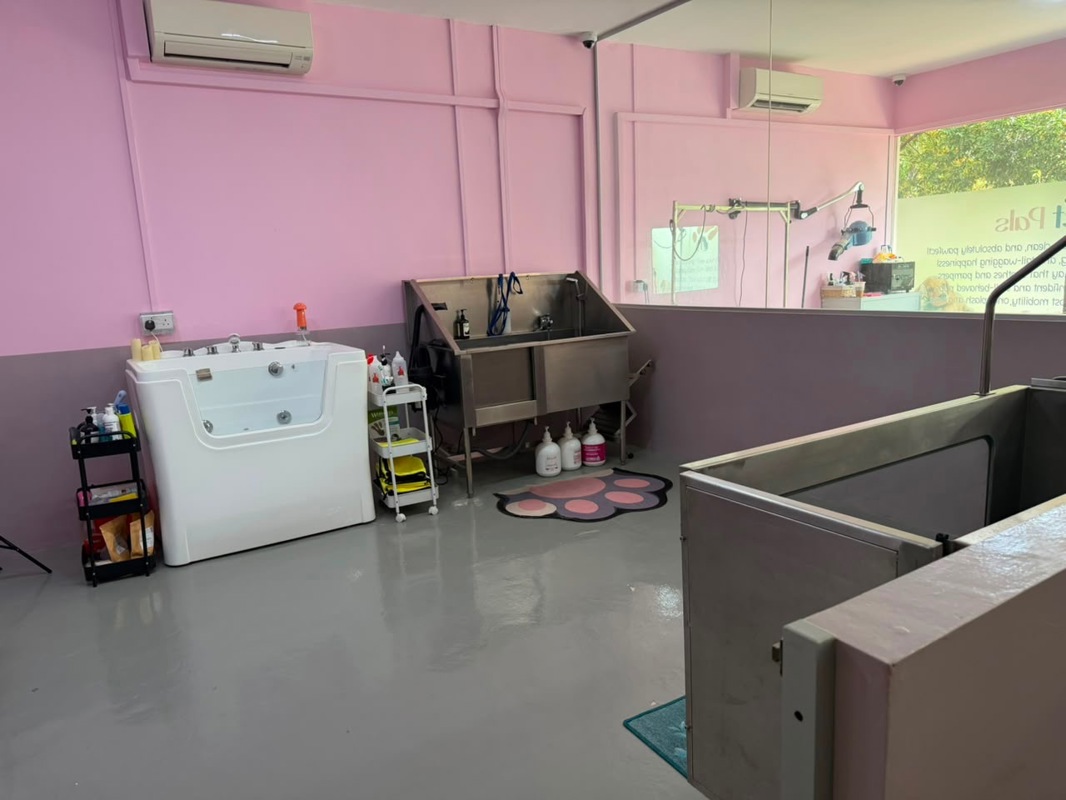
Pet Grooming, Daycare And Hydrotherapy Business In Thomson Area

Basic Business Information

  • Industry: Pet & Animal Services
    • Legal Structure: Mostly one-off transactions
    • Operating Model: Physical
    • Year Founded: 2024
    • Team Size: 1-5
  • Reasons for Selling:

    Personal Issues

  • Description

    Financial Information

    Currency: SGD (S$)
    Financial Trends
    Annual Revenue Overview
    Financial Summary (SGD)
    Revenue (Dark Purple)
    Profit (Light Purple)
    3-Year Financial Summary
    Year Revenue (SGD) Earnings (SDE) NET MARGIN
    2025 SGD 7K SGD 2K 28.6%
    MONTHLY OPERATING COSTS
    Not Disclosed
    MONTHLY MISC. EXPENSES
    Not Disclosed
    BUSINESS MODEL
    Revenue Model: Mostly one-off transactions
    Tangible Assets:
    • N/A

    Intangible Assets:
    • N/A

    Other Details

  • Licenses & Permits:

    N/A

  • Support Provided:
    • N/A

    SWOT Analysis

    AI paraphrased description: This SWOT analysis helps you quickly see the good and bad sides of a business, plus the opportunities to grow it and the risks to watch out for. It makes it easier for buyers to decide if a business is worth buying without getting lost in complicated details

  • Strong early review profile on Google
  • Google rating is 5.0 with 28 reviews, which is above the common ~4.3–4.8 band seen across many Singapore pet service operators. At 28 reviews, this is already beyond the ‘insufficient data’ zone and represents an acquisition-ready trust asset that typically takes months to years of consistent delivery to build. If service quality is maintained post-handover, this rating can reduce initial customer-acquisition friction versus starting from zero.

  • Multi-service capability that is costlier to replicate from scratch
  • The operation offers grooming/spa, daycare, and hydrotherapy in one site, which is a broader capability set than a grooming-only storefront. In Singapore, setting up hydrotherapy and daycare generally requires more space, equipment, SOPs, and staffing readiness than a basic grooming station, so acquisition can shortcut the build-and-ramp period. This breadth also creates immediate cross-sell pathways (e.g., grooming clients into daycare trials, rehab clients into regular grooming plans).

  • Demonstrated customer traction for an early-stage operator
  • The seller reports serving 150+ customers within roughly seven months of operations, suggesting early market pull relative to many first-year pet services that can take 6–12 months to build a stable rebooking base. While the figure is unverified, if corroborated by POS/booking records it would indicate the business is not starting from a cold launch. This matters because early utilisation is often the key driver of payback for a fixed-premise service business in Singapore.

  • Visible social channels and direct-response contact pathways
  • Public profiles exist on Facebook and Instagram, and WhatsApp contact discovery appears in third-party results, which matches how many Singapore pet owners prefer to enquire and book. For small pet service operators, a working social + WhatsApp funnel is often a baseline requirement to keep appointment slots filled without heavy ad spend. This provides a buyer with a running go-to-market surface rather than rebuilding presence from scratch.

  • Financial scale is currently very small for a physical pet services setup
  • Seller-submitted 2025 revenue is SGD 7k with earnings (SDE) of SGD 2k. For context, many Singapore brick-and-mortar grooming shops (even small teams) commonly target at least low six-figure annual revenue once stabilised, given capacity and rental/utility realities; at this reported level, cashflow may not yet cover a full commercial cost base. A buyer should treat valuation as primarily dependent on verification of run-rate growth, utilisation, and transferable assets rather than trailing earnings.

  • Revenue model is mostly one-off, increasing demand volatility
  • The listing states revenue is mostly one-off transactions rather than packaged memberships or recurring plans. In Singapore pet grooming/daycare, operators that convert customers into rebooking cycles or multi-session packages typically have more predictable capacity planning and marketing efficiency than purely ad-hoc sales. Without stronger repeat/contracted behaviour, a buyer inherits higher week-to-week fill risk, especially during ownership transition.

  • Entity structure and public records signals warrant reconciliation
  • The seller describes the business as a sole proprietorship, while third-party directories reference a Pte. Ltd. entity (UEN 202335274W) and also surface a separately listed sole proprietorship name (PAWFECT PALS GROOMING, UEN 53518573A). In Singapore, this can affect whether the buyer is acquiring shares, assets, or a business name, and which contracts/leases/employment arrangements sit under which UEN. A buyer should confirm the exact contracting entity used for invoices, lease, staff employment, and bank accounts before proceeding.

  • Website functionality cannot be validated from provided scrape
  • The website URL is present and the Google profile links to it, but no website content was provided in the scrape, so booking/enquiry workflow and professionalism cannot be assessed here. For Singapore consumer pet services, online booking/FAQ/pricing clarity is a common expectation and can materially affect conversion rate and staff time spent on enquiries. A buyer may need to budget for web fixes or a booking-system implementation if current conversion relies heavily on manual messaging.

  • Convert one-off services into packages and memberships
  • Within the first 90–180 days, a new owner can introduce structured bundles (e.g., 4–6 grooming credits, daycare passes, hydrotherapy rehab packs) and a simple membership tier that includes priority slots, which is common among Singapore pet operators seeking predictable utilisation. This is achievable using the current service mix and existing review credibility, but it requires clean pricing, booking rules, and staff capacity planning so packages do not create peak-time bottlenecks. If executed, it can lift repeat rates and smooth monthly cashflow without needing a new location.

  • Increase hydrotherapy utilisation through referral partnerships
  • Hydrotherapy demand in Singapore is often driven by vet, rehab, and trainer referrals rather than walk-in discovery, so building 3–6 referral relationships (within 6–12 months) could materially improve session throughput. The business already markets hydrotherapy publicly; the unlock is a structured referral program, outcome tracking (session notes, progress updates), and clear protocols that partners can trust. This requires prerequisite SOP documentation and liability/waiver alignment before scaling volume.

  • Operationalise rebooking and review capture to protect the 5.0 rating
  • Over the next 3–6 months, the company can systemise post-visit rebooking prompts and review capture (e.g., automated WhatsApp follow-ups), using the existing 28-review baseline to accelerate trust compounding. Many Singapore pet service businesses grow primarily through repeat cadence and referrals; tightening this loop can raise lifetime value without proportional marketing spend. This is achievable if the booking stack and customer database are consolidated and ownership handover does not disrupt service quality.

  • Cross-sell ladder between grooming, daycare and spa add-ons
  • With the current ‘one-roof’ service mix, a buyer can implement a structured cross-sell journey within 6–12 months (e.g., daycare trial for grooming clients, grooming upsell for daycare regulars, spa add-ons as standardised menus). In Singapore, add-ons and bundles are a major margin driver in grooming because labour is the limiting capacity; well-designed menus increase revenue per slot without increasing headcount. This requires prerequisite standard operating times per breed/size and clear staff incentives to avoid service delays.

  • Competitive pressure from larger multi-outlet pet retailers and salons
  • Singapore’s pet services market includes larger chains and retailers that bundle grooming with retail spend, loyalty programs, and high-visibility mall locations; this can compress pricing power for smaller operators that rely on appointment filling. A nearby example of a scaled competitor is Heads Up For Tails (HUFT), which has strong brand visibility and curated retail + spa positioning, making comparison shopping easier for consumers. The business will be more exposed to this threat if it competes primarily on discounts rather than a defensible handling approach and specialty services like hydrotherapy.

  • Groomer hiring and retention costs may rise faster than pricing
  • The operation depends on groomers (seller states two groomers), and skilled groomers in Singapore can be difficult to hire and retain as demand grows. If labour costs increase but the business cannot raise grooming prices or improve throughput, margins can compress quickly because labour is the primary cost driver per appointment. This risk is heightened for a small team where any single departure immediately reduces capacity.

  • Review and platform sensitivity during ownership transition
  • With a high Google rating, customer expectations will be set at a premium level; even small service changes post-acquisition can translate into rating volatility. In Singapore consumer services, Google discovery and social proof are major booking drivers, so a dip in rating or review velocity can reduce inbound enquiries. This threat is most acute in the first 3–6 months post-handover when processes and staff routines are adjusting.

  • Premises and landlord terms could tighten operating economics
  • For a physical pet care setup with space-intensive services (daycare/hydrotherapy), rental renewals, fit-out restrictions, or assignment constraints can materially change unit economics within 24 months. If rent escalates or landlord consent for transfer is delayed/denied, the buyer may face interruption risk or relocation costs, and relocation can disrupt client habits in a neighbourhood-based model. This is an external threat because it depends on landlord and market rent conditions, not just operator performance.

    DATA DISCLOSURE

    • Analysis based on self-reported data provided by seller
    • Independent verification of all claims recommended
    • Buyers should conduct comprehensive due diligence including financial audit, customer interviews, and legal review
    • Contact seller for supporting documentation (tax returns, contracts, licenses, etc.)

    Asking Price:

    S$70,000

    2.4 / 5

    Preferred Contact

    Email

    Location:

    Ang Mo Kio

    Revenue:

    S$7,000

    Profit:

    S$2,000

    Contact

    Please wait while we prepare your results

    Checking the data and setting up the next view. Please stay on this page while we finish loading. Almost there. Your content will appear shortly.