

retiring
Key Highlights
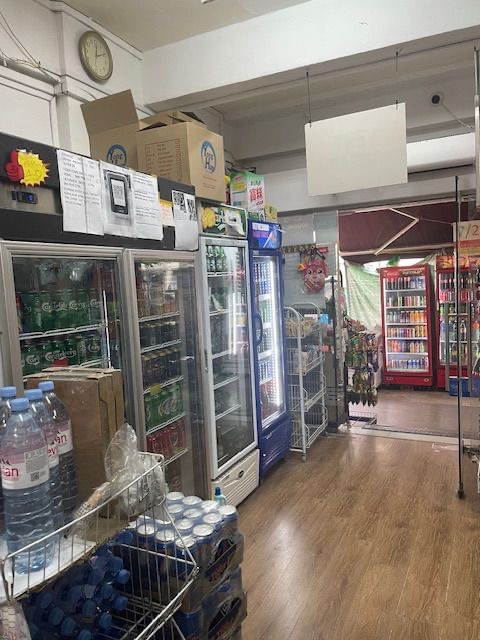
Retail business described as a wholesale mini-mart and provision shop focused on cigarettes, liquors, beers, and groceries. Registered as an Exempt Private Company Limited by Shares on 24 September 2025 and listed as a live company. Principal activity is mini-marts, convenience stores and provision shops, with a secondary activity in retail sale of computer hardware and software (except games and cybersecurity hardware and software). Operates as a physical business with a team size listed as 1–5 and a revenue model described as mostly one-off transactions. The seller describes approximately nine years of operating history and a monthly rent of 5,000.
What Makes This Business Unique
The listing combines a convenience/provision shop operation with an established wholesale focus in regulated product categories (cigarettes and liquor) alongside general grocery sales. The sale is described as including a broad set of operating assets—inventory plus chillers, freezers, POS, CCTV, cash registers, and store fixtures—positioning it as a turnkey handover. The business is also registered with a secondary activity covering computer hardware and software retail, which may support an expanded product mix under the same entity.
Operations
Revenue is generated primarily through in-store retail and wholesale transactions, described as mostly one-off purchases. The seller describes the handover as including inventory and operating equipment such as chillers, freezers, POS, CCTV, cash registers, and store fixtures. The business is described as operating from a single physical shop with stated operating hours of 9:00am–11:30pm and monthly rent of 5,000. The company’s registered activities include mini-mart/provision shop operations and a secondary activity in computer hardware and software retail (excluding games and cybersecurity hardware and software).
Customers & Market
Customers are described as mini-mart shoppers and wholesale buyers purchasing cigarettes, liquors, beers, and groceries. The seller references existing customers and followers associated with the current shop operation. The business is positioned as a local physical retail outlet with extended daily operating hours.
Why This Business
The seller describes a turnkey acquisition including inventory and core retail infrastructure (cold storage, POS, CCTV, and store fixtures), reducing setup time compared with starting from an empty unit. The seller describes an established operating base with existing customers and wholesale supply activity in cigarettes and liquor, which typically takes time to build. The company is already incorporated and listed as live, with registered business activities aligned to mini-mart operations and an additional category for computer hardware and software retail. The listing includes stated financial figures for 2025 (annual revenues of 180,000 and annual earnings of 36,000), providing a baseline for diligence.
| Year | Revenue (SGD) | Earnings (SDE) | NET MARGIN |
|---|---|---|---|
| 2026 | SGD 180K | SGD 36K | 20.0% |
Inventory: S$50,000
N/A
N/A
AI paraphrased description: This SWOT analysis helps you quickly see the good and bad sides of a business, plus the opportunities to grow it and the risks to watch out for. It makes it easier for buyers to decide if a business is worth buying without getting lost in complicated details
The seller reports the sale includes inventory plus key operating assets such as chillers, freezers, POS, CCTV, cash registers, and store fixtures, which reduces startup time versus fitting out a new unit from scratch.
For a small Singapore mini-mart, replacing cold storage, POS, shelving and CCTV typically runs in the tens of thousands of dollars depending on condition and capacity; acquiring an already-configured setup can preserve working capital for stock and licences.
If the equipment list and condition are verified, the buyer is effectively acquiring operating readiness on day one rather than a renovation project.
Seller-submitted figures indicate 2025 revenue of S$180k and earnings (SDE) of S$36k, implying an approximate 20% margin.
For Singapore convenience/provision shops, net margins are often ~2–8% depending on product mix (tobacco and alcohol can be margin-compressive after compliance and shrinkage), so a ~20% margin would be strong if it holds under due diligence.
If validated against POS, bank statements and supplier invoices, this profitability level would directly support acquisition value relative to a typical small-format retail outlet.
The seller describes a wholesale mini-mart focused on cigarettes, liquors, beers and groceries, which are categories that can drive frequent replenishment purchasing patterns.
In Singapore, stores that legally carry tobacco and alcohol can become a regular stop for nearby residents or late-night shoppers; building this basket mix typically takes time through supplier arrangements and compliance routines.
If the required licences and supply continuity are confirmed, this product mix can be harder to replicate quickly than a groceries-only provision shop.
The seller reports operating hours of 9:00am–11:30pm, which is longer than many small provision shops that close earlier in the evening.
In Singapore convenience retail, extending late-evening availability can capture incremental demand for beverages, cigarettes and top-up essentials, provided labour scheduling and security controls are in place.
If staffing, SOPs and handover are documented, this schedule can be an operational capability a buyer can continue immediately.
The listing states the company was registered in September 2025, while also describing approximately nine years of operating history.
For Singapore acquisitions, this difference matters because customer relationships, supplier terms, licences and financial track record may sit with a prior entity or informal arrangement rather than the current company.
A buyer should confirm continuity through ACRA records, historical lease agreements, and evidence that sales were booked under the selling entity for the period claimed.
Only one year of figures (2025) is provided and there is no breakdown for COGS, shrinkage, labour, utilities, payment fees, or licence costs.
For small Singapore mini-marts, profitability is highly sensitive to rent and labour; without detail, a buyer cannot benchmark whether earnings are sustainable after normalising owner time and staffing.
A buyer should validate revenue via POS Z-reports and bank deposits and validate margins via supplier invoices and stocktake practices before relying on the S$36k SDE figure.
The seller reports monthly rent of S$5,000 (S$60,000 per year) against annual revenue of S$180,000, implying rent is ~33% of revenue.
In Singapore convenience retail, rent-to-sales is often targeted closer to ~10–20% for a healthier model, with exceptions for very high-footfall sites where sales are much larger.
Unless the location demonstrably supports materially higher sales or gross margin, this cost structure can constrain cashflow and increases reliance on tight inventory control and staffing efficiency.
No Google Business Profile data, review count, or third-party mentions were provided, and the listing includes no social accounts.
For a Singapore mini-mart serving walk-in demand, visibility on Google Maps and basic digital touchpoints commonly contribute to discovery for new residents and late-night shoppers; the current baseline is not assessable from the available sources.
A buyer may need to invest time in setting up/optimising digital listings and standardising store information, which is a day-one marketing task rather than an optional enhancement.
Within the first 60–90 days, a new owner can set up a verified Google Business Profile, WhatsApp ordering, and basic social pages to capture repeat demand for beverages, snacks and groceries, using store hours and product availability as the core content.
This is achievable without major capex if the store already has POS and CCTV in place (seller-reported), but it requires that product pricing, delivery/collection SOPs, and staff responsibilities are documented first.
If executed, it can add incremental revenue from nearby households and late-night customers without relying solely on walk-in traffic.
Over 3–6 months, the buyer can implement SKU-level controls (cycle counts, expiry tracking, and variance reporting) leveraging the existing POS setup (seller-reported) to reduce stock loss and dead inventory, which are common profit leaks in small convenience retail.
This is practical if supplier invoices and purchase prices are systematically captured from day one and if the opening stocktake at acquisition is independently verified.
Even a 1–2% improvement in gross margin or shrinkage control can be material for a store with seller-reported revenue of S$180k.
Within 6–12 months, a new owner can convert informal wholesale activity (seller-described) into simple account-based selling with documented pricing tiers, minimum order quantities, and payment terms to improve cashflow predictability.
This is achievable if the current wholesale customer list and historical order patterns are handed over and if supplier terms allow stable pricing for cigarettes and alcohol categories.
Done well, it can improve working-capital discipline and reduce reliance on purely one-off walk-in transactions.
The entity is described as having a secondary activity in computer hardware/software retail; within 6–12 months, the buyer could trial small, fast-moving add-ons (phone accessories, chargers, basic peripherals) that fit a convenience retail basket and can carry higher gross margins than staples.
This is realistic if shelf space and security controls are sufficient and if the store’s customer profile supports impulse add-ons, which should be confirmed via a short in-store observational study and sales pilots.
If the pilots work, it diversifies margin sources without requiring a second outlet.
Selling cigarettes and liquor in Singapore is tightly regulated, and licence breaches (e.g., age verification failures, improper display/advertising, or documentation lapses) can lead to penalties or licence suspension, which would immediately reduce revenue for a store that depends on these categories.
Because the business is described as focused on regulated products, the downside impact is larger than for a groceries-only provision shop.
This threat is in motion continuously via ongoing enforcement expectations, so the buyer’s compliance SOPs and staff training become commercially critical.
Singapore’s tobacco excise environment and periodic price increases can shift consumer behaviour toward reduced consumption or substitution, and can push some demand toward alternative channels.
For a small-format retailer with seller-described cigarette focus, even modest volume decline can meaningfully impact turnover because these items are high-frequency drivers of store visits.
If footfall is materially linked to cigarette purchases, ancillary grocery and beverage sales may also soften within 24 months.
Large operators (e.g., 7-Eleven/Cheers) and nearby supermarkets can compete aggressively on price, range, and promotions, and they typically have stronger supplier rebates and centralised operations.
At the scale implied by seller-reported S$180k annual revenue and a small team, the business has less room to absorb promotion-led margin compression while still covering fixed rent.
This makes differentiation through availability, speed, and localised assortment more important, and any mis-execution can quickly show up in sales.
With seller-reported rent of S$5,000 per month, a renewal or rent step-up can materially affect profitability for a store at this revenue level, especially if sales do not scale proportionately.
In Singapore retail, landlords may reprice leases at renewal based on market conditions; if assignment terms are restrictive, continuity risk increases during the transaction.
This threat can play out within 24 months depending on remaining lease term and clauses, which should be clarified early.
DATA DISCLOSURE
Please wait while we prepare your results