

img
  • Professional Services
  • Physical
  • 1 hour ago
  • 2 views

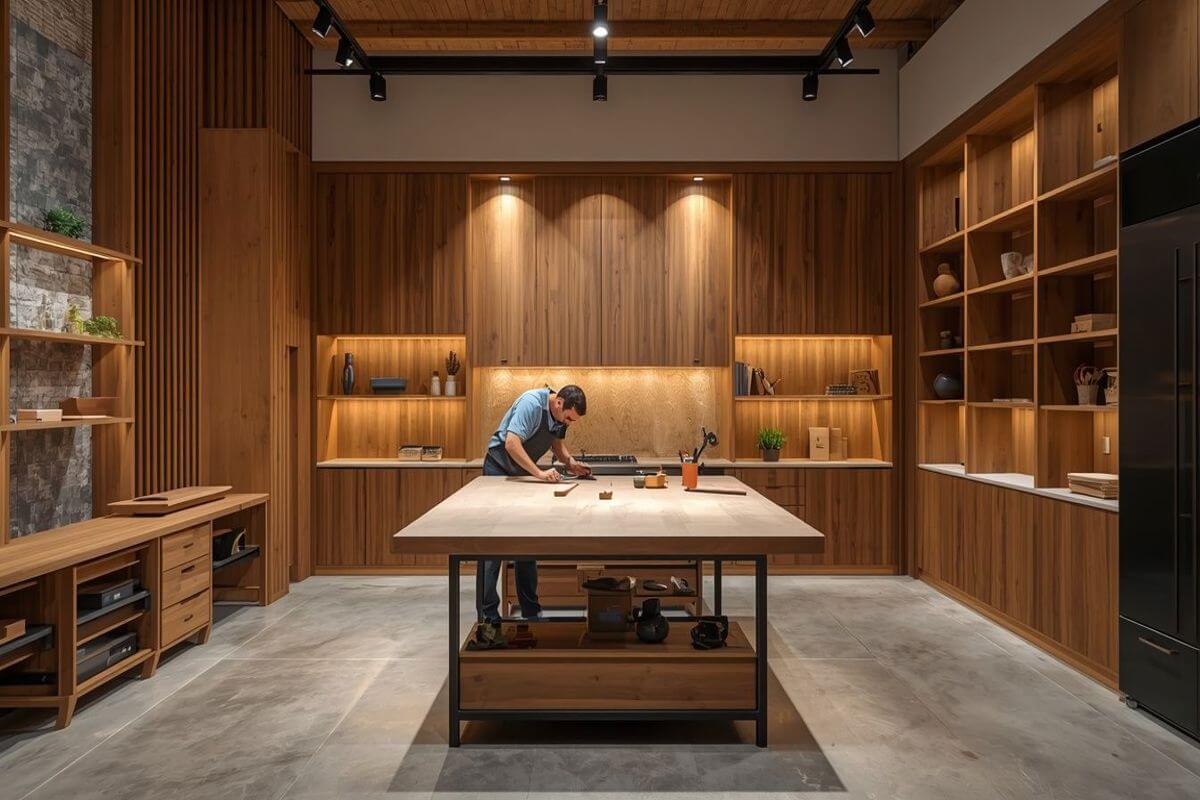
Singapore Carpentry And Custom Furniture Workshop For Sale

Basic Business Information

  • Industry: Professional Services
    • Legal Structure: Mostly one-off transactions
    • Operating Model: Physical
    • Year Founded: 2023
    • Team Size: 1-5
  • Reasons for Selling:

    Owner Retiring

  • Description

    Financial Information

    Currency: SGD (S$)
    Financial Trends
    Annual Revenue Overview
    Financial Summary (SGD)
    Revenue (Dark Purple)
    Earning (Light Purple)
    3-Year Financial Summary
    Year Revenue (SGD) Earnings (SDE) NET MARGIN
    2026 SGD 2.3M SGD 100K 4.4%
    2025 SGD 2.7M SGD 110K 4.1%
    2024 SGD 1.3M SGD 90K 6.9%
    MONTHLY OPERATING COSTS
    Not Disclosed
    MONTHLY MISC. EXPENSES
    Not Disclosed
    BUSINESS MODEL
    Revenue Model: Mostly one-off transactions
    Tangible Assets:
    • Equipment: S$400,000

    • Inventory: S$750,000

    Intangible Assets:
    • Goodwill: S$1000

    • Goodwill: S$3000

    • Goodwill: S$6000

    Other Details

  • Licenses & Permits:

    N/A

  • Support Provided:
    • Training Support: The owners are currently involved in: • Operational oversight • Supplier coordination • Customer relationship management • Project supervision • Strategic decision-making
    • Staff Support: staff support
    • Vendor / Support: Supplier introductions
    • Client / Customer Support: Customer transition supportSpecific customer names and sensitive commercial information will only be disclosed during advanced due diligence stages.

    SWOT Analysis

    AI paraphrased description: This SWOT analysis helps you quickly see the good and bad sides of a business, plus the opportunities to grow it and the risks to watch out for. It makes it easier for buyers to decide if a business is worth buying without getting lost in complicated details

  • Integrated delivery stack across showroom, production, and installation
  • The seller reports an operating setup that combines customer-facing showroom engagement with workshop/production capability, project management, on-site installation, and after-sales servicing. In Singapore customised carpentry, many small operators rely heavily on subcontractors; having an end-to-end workflow can reduce coordination delays and support better control of quality and handover timelines. If validated, this allows a buyer to operate immediately with fewer third-party dependencies than a start-from-scratch entrant would face.

    Because the business claims it already handles sourcing, inventory handling, fabrication coordination, and installation, a new owner can focus on sales and margin management rather than building basic delivery capability in the first year.

  • Reported scale with repeatable revenue generation in early operating years
  • Seller-submitted figures indicate revenue of S$1.3m (2023), S$2.7m (2024), and S$2.3m (2025), which is meaningful throughput for a small carpentry/furnishing operator in Singapore even with project-based timing effects. Many early-stage fit-out and carpentry SMEs operate below S$1m annual revenue; at S$2m+ revenue (if verified), the buyer is acquiring an operation that has already cleared early go-to-market hurdles. The project-based nature means year-to-year swings are not unusual, but this revenue level suggests established quoting, fulfilment, and supplier execution routines are in place.

    A buyer should still validate how much of this revenue is driven by a small number of large projects versus a diversified job pipeline.

  • Tangible asset base that would be costly to replicate quickly
  • The seller reports carpentry machinery/equipment of S$400k and inventory/raw materials of S$750k. For Singapore workshops, replicating machinery and tooling can take months of capex planning, vendor lead times, and commissioning, and inventory build-up ties up working capital. If the asset list and condition are confirmed, the acquisition can be a faster route to operational readiness than building a workshop from zero.

    Given the reported inventory quantum, there may also be immediate fulfilment capacity for ongoing projects if stock is usable and well-managed.

  • Multi-segment customer access: homeowners and trade partners
  • According to the listing, customers include residential homeowners as well as interior designers, renovation contractors, and commercial clients. In Singapore, trade-partner channels (ID/reno contractors) can provide higher job volume and smoother lead flow than purely homeowner inbound, but require strong delivery reliability. If the claimed mix is real, the buyer inherits channel optionality—balancing higher-margin direct clients with steadier partner-driven project flow.

    This mix can also support cross-selling from one-off carpentry into larger furnishing and fit-out scopes when relationships are retained post-sale.

  • Low reported earnings margin for the revenue scale
  • Seller-submitted earnings (SDE) of S$90k–S$110k on S$1.3m–S$2.7m revenue imply roughly ~4% SDE margin across 2023–2025. For Singapore carpentry/interior fit-out businesses, typical net/SDE margins are often ~5–15% depending on subcontracting intensity, defect rectification rates, and pricing discipline; ~4% (if verified) suggests limited buffer for cost overruns or rework. This means a buyer may need to tighten variation-order processes, procurement controls, and site productivity quickly to protect cashflow.

    During due diligence, the buyer should reconcile whether owner add-backs, warranty/defect provisions, and inventory write-downs are adequately reflected in the stated SDE.

  • Primarily one-off project revenue increases cashflow and pipeline dependence
  • The seller reports the revenue model is mostly one-off transactions. In Singapore renovation/carpentry, project-based revenue typically creates lumpier cash collection, higher working capital swings (deposits, progress claims, retention), and greater sensitivity to short-term lead flow. Compared with operators that have maintenance retainers or recurring commercial accounts, a one-off model generally requires more consistent sales activity and stronger pipeline visibility to keep utilisation high.

    A buyer inherits the need to actively manage quotation volume, conversion rates, and progress billing discipline from day one.

  • Sole proprietorship structure complicates transfer of contracts and liabilities
  • The business is stated to be a sole proprietorship, which in Singapore is commonly acquired via asset purchase rather than share transfer. This can add legal work to novate/assign customer contracts, manage deposits and retention sums, and ensure warranties/defects obligations are clearly transferred or carved out. Relative to a private limited company acquisition, buyers often face more operational friction in ensuring continuity of trading history, supplier credit terms, and any licence/permit linkages to the proprietor.

    A buyer should plan for a structured transition timeline and customer communications to reduce disruption.

  • Limited externally verifiable reputation and marketing footprint in available data
  • No website, social media links, or Google Business Profile data was provided, and no third-party mentions were included in the sources here, so lead-generation channels and customer sentiment cannot be validated externally. For Singapore homeowner-facing carpentry and furnishing, competitors commonly rely on portfolio visibility and reviews to convert leads; if this business is mainly referral-driven, the buyer inherits a dependence on relationship continuity through the handover. The absence of verifiable digital signals also reduces a buyer’s ability to assess brand equity and complaint/defect patterns before signing.

    This does not imply weak performance, but it increases verification work and may require near-term marketing investment post-acquisition.

  • Introduce recurring revenue via maintenance and post-install service plans
  • Within 6–12 months, a new owner could convert after-sales servicing into a paid maintenance/rectification plan for past projects (e.g., annual hinge/track servicing, minor repairs, touch-ups), creating a small recurring base that smooths project cyclicality. This is achievable because the seller already describes after-sales servicing as part of operations; the change is primarily packaging, pricing, and scheduling rather than new capability. The prerequisite is a clean project database (client contacts, installed items, warranty status) so outreach can be systematic and SLA expectations are clear.

    If executed, this can improve cashflow predictability versus a purely one-off model that depends on continuous new quotations.

  • Improve gross margin through tighter inventory controls and SKU rationalisation
  • In the first 90–180 days, a buyer can run an inventory audit and implement tighter purchasing controls (min/max levels, approved supplier list, job-level material reconciliation) to reduce dead stock and shrinkage—especially material given the seller-reported S$750k inventory position. Singapore carpentry margins are often won or lost in procurement discipline and rework avoidance; even small percentage improvements can materially change SDE when revenue is in the S$2m range. The prerequisite is validating inventory quality (ageing, usability, damages) and mapping which materials are genuinely fast-moving across typical project types.

    This opportunity is particularly actionable because it leverages an existing asset base rather than requiring new sales channels.

  • Build a basic portfolio and lead-capture funnel to diversify beyond referrals
  • Within 3–6 months, a buyer could launch a simple website/portfolio plus Google Business Profile and WhatsApp lead capture, using completed project photography and standard quotation templates to shorten sales cycles. For Singapore renovation and carpentry, buyers typically compare multiple vendors online before committing; having a clear portfolio and response workflow can increase conversion without changing the core delivery capability. The prerequisite is securing permission to use past project photos and clarifying whether any projects were delivered under partner brands (IDs/contractors) that restrict public display.

    This also creates a measurable marketing baseline (inquiries, conversion rate, CAC) that supports more predictable growth planning.

  • Formalise trade-partner programme for interior designers and renovation contractors
  • Over 6–12 months, the company can systematise its B2B channel by offering IDs/reno contractors a clear partner rate card, lead-time commitments, and documented QA/warranty handling—turning ad-hoc referrals into repeatable partner throughput. This is achievable given the seller’s stated existing customer mix that includes designers and contractors, and the integrated workshop-install model can be positioned as a reliability advantage. The prerequisite is clarity on current partner concentration and the company’s true capacity constraints, so service levels can be met without creating defects or schedule slippage.

    If implemented well, this can increase utilisation and reduce volatility compared to relying on sporadic homeowner projects.

  • Material and labour cost inflation can compress already-thin margins
  • With seller-reported SDE margins implied around ~4%, the business has limited buffer against increases in timber/laminate/hardware prices, subcontractor rates, or delivery/installation manpower costs. In Singapore renovation and fit-out, cost increases often hit mid-project while quotations are fixed, and smaller operators can struggle to pass through increases without strong variation-order discipline. Even with good execution, external input-cost pressure within the next 24 months could materially reduce profitability unless pricing, procurement terms, and project scoping are tightened.

    This threat is amplified for project-based firms where each job’s margin depends heavily on accurate measurement, wastage control, and rework minimisation.

  • Competitive pricing pressure from larger renovation and carpentry networks
  • Singapore’s carpentry and interior furnishing segment includes many operators with broader marketing reach and designer ecosystems that can bid aggressively to win volume. For a small team (seller reports 1–5), competitors with larger production capacity or stronger digital lead funnels can absorb thinner margins on some jobs to keep utilisation high, which can force smaller workshops to choose between price matching or losing deal flow. Over the next 24 months, this dynamic can reduce average selling prices or increase customer expectations on lead times and defect rectification without corresponding price uplift.

    The business’s defence will depend on differentiated execution (quality and on-time delivery) and the strength of partner relationships, which should be validated.

  • Reliance on partner referrals may weaken during ownership transition
  • Where trade-partner work (IDs/contractors) forms a meaningful share of revenue—as the seller indicates—those relationships can be relationship-led and sensitive to changes in response time, pricing, and defect handling after the sale. In Singapore, designers and main contractors often have alternative carpentry subcontractors ready, and switching costs are not always high. Within 24 months, partner churn could reduce project inflow if the handover is not managed with clear service-level commitments and continuity of key staff or installers.

    This threat is more pronounced for smaller teams where a few partner accounts may represent a large portion of monthly utilisation.

  • Premises and compliance constraints can disrupt workshop-based operations
  • Because the model includes a workshop/production function, continuity depends on lease transferability, landlord consent, and the premises being approved for the intended use. In Singapore, workshop operations can face tighter controls on noise, dust, fire safety, and storage; if any approvals, renovations, or usage conditions are non-transferable, the buyer could face downtime or additional capex. Over a 24-month horizon, lease renewal or rent escalation can also materially affect profitability for a low-margin operator.

    This threat is external in the sense that it is driven by landlord terms and regulatory requirements, regardless of operational competence.

    DATA DISCLOSURE

    • Analysis based on self-reported data provided by seller
    • Independent verification of all claims recommended
    • Buyers should conduct comprehensive due diligence including financial audit, customer interviews, and legal review
    • Contact seller for supporting documentation (tax returns, contracts, licenses, etc.)

    Asking Price:

    S$1,200,000

    3.1 / 5

    Preferred Contact

    Email

    Location:

    Woodgrove

    Revenue:

    S$2,300,000

    Earnings:

    S$100,000

    Contact

    Please wait while we prepare your results

    Checking the data and setting up the next view. Please stay on this page while we finish loading. Almost there. Your content will appear shortly.